Advanced Tooling for Duplex and Super-Alloy Finned Tube Extrusion: Powder Metallurgy and PVD Coatings
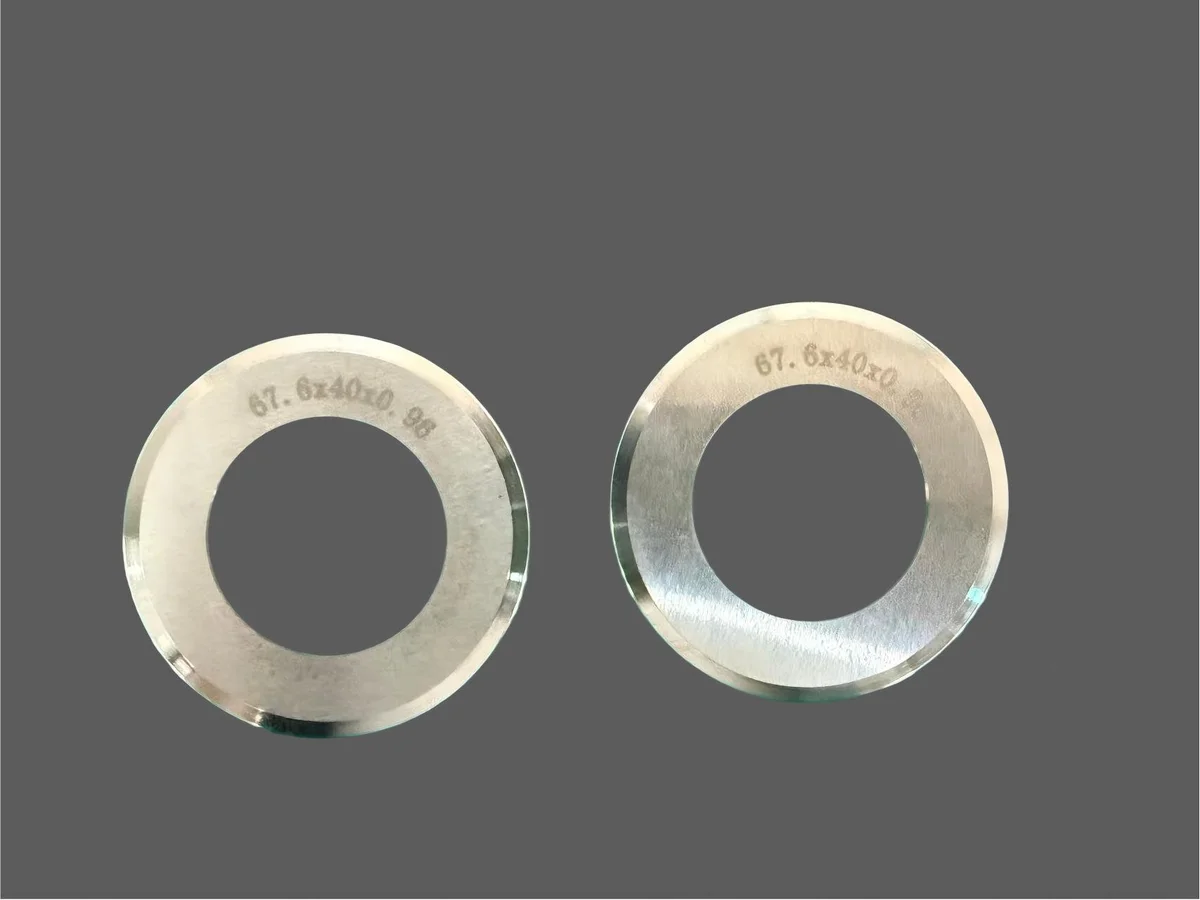
A technical analysis of rolling duplex stainless steel and nickel super-alloy finned tubes. Learn about Powder Metallurgy steels, flank wear, and AlTiN coatings.
In the most demanding industrial environments—such as offshore oil and gas platforms, chemical processing plants, and marine condensers—standard stainless steel alloys like 316L are often insufficient. These applications require high-alloy materials, including Duplex Stainless Steels (e.g., S31803, S32205) and Nickel-based Super-alloys (e.g., Inconel 625, Monel 400, Hastelloy).
Extruding fins on these high-performance alloys represents the absolute peak of cold-rolling difficulty. With tensile strengths exceeding 800 MPa and extreme work-hardening rates, these alloys will quickly destroy standard tooling.
This technical article analyzes how advanced Powder Metallurgy (PM) steels and specialized PVD coatings enable the high-efficiency extrusion of duplex and super-alloy finned tubes.
1. The Challenge of High-Alloy Extrusion
Duplex stainless steels feature a dual-phase microstructure consisting of equal parts ferrite and austenite. This unique structure provides double the yield strength of standard austenitic steels. Nickel super-alloys, on the other hand, maintain high mechanical strength and creep resistance at extreme temperatures.
When cold-rolling these alloys:
- Extreme Yield Strength: The rolling blades must exert forces that exceed the elastic limit of the duplex structure, requiring radial pressures up to 3,500 MPa.
- Severe Abrasive Wear: The high concentration of chromium, molybdenum, and nickel creates hard carbide phases within the alloy, which act as abrasives against the tool steel.
- Thermal Stress: The low thermal conductivity of nickel-alloys (~11 W/m·K) prevents heat from dissipating through the tube. Instead, the heat is concentrated directly at the blade tip, accelerating thermal wear.
2. Metallurgy: The Powder Metallurgy (PM) Revolution
Traditional High-Speed Steels (like M2 or M42) are manufactured via conventional ingot casting. During cooling, large carbide clusters segregate at the grain boundaries, creating microscopic areas of weakness. Under the 3,500 MPa pressures of duplex rolling, these carbide clusters act as initiation sites for fatigue cracking, leading to premature blade chipping.
The PM Manufacturing Process
Powder Metallurgy solves this problem by atomizing molten tool steel into an inert gas chamber, creating an ultra-fine powder that cools instantly. This powder is then compacted under Hot Isostatic Pressing (HIP) to form a 100% dense steel with an ultra-fine, homogeneous carbide distribution.
Conventional HSS Carbide Structure      Powder Metallurgy (PM) Structure
     +-----------------------+              +-----------------------+
     |   ###   #####   ###   |              |  . . . . . . . . . .  |
     |  #####   ###   #####  |              |  . . . . . . . . . .  |
     |   ###   #####   ###   |              |  . . . . . . . . . .  |
     +-----------------------+              +-----------------------+
(Large segregated clusters) (Ultra-fine, uniform dispersion)- ASP 2030 / ASP 2060: These PM grades feature high cobalt (8.5% to 10.5%) and vanadium (3.1% to 6.5%) contents. The vanadium forms ultra-hard vanadium carbides (V₄C₃, ~2,800 HV) that are uniformly dispersed throughout the matrix, providing unmatched abrasive wear resistance.
- Chipping Resistance: Because there are no large carbide clusters, the fracture toughness of PM steels is up to 150% higher than conventional HSS at equivalent hardness levels (65 – 67 HRC), virtually eliminating blade chipping.
3. High-Performance PVD Coatings: AlTiN and AlTiCrN
For duplex and super-alloy extrusion, standard TiN or CrN coatings will quickly wear away. The application requires advanced multi-layered PVD coatings:
- Aluminum Titanium Nitride (AlTiN): AlTiN has an extremely high oxidation temperature of 900°C. As the blade tip heats up during extrusion, the aluminum in the coating reacts with ambient oxygen to form a nano-scale aluminum oxide (Al₂O₃) barrier. This barrier prevents heat from transferring into the tool steel, maintaining the blade’s core hardness.
- AlTiCrN (Aluminum Titanium Chromium Nitride): This quaternary coating combines the high-temperature stability of AlTiN with the low-friction and anti-adhesive properties of CrN. It provides a hardness of 3,200 HV and resists both the abrasive wear of duplex carbides and the adhesive wear of nickel-alloys.
4. Precision Alignment and Spacing
When rolling high-alloy tubes, there is zero tolerance for arbor misalignment. Even a 0.01 mm axial shift between arbors will cause the high-strength tube to push the rolling blades sideways, leading to instant shearing of the blade tips.
- High-Precision Spacers: Spacing collars must be manufactured from hardened tool steel and ground to a parallelism tolerance of ±0.001 mm.
- Rigid Arbor Shafts: Arbor shafts must be engineered with high-strength alloy steels and supported by heavy-duty bearings to prevent shaft deflection under 3,500 MPa of radial load.
Technical Tooling Partnership with NEXMEK
Extruding duplex and super-alloy finned tubes requires world-class tooling. NEXMEK manufactures premium finned tube rolling blades using imported European Powder Metallurgy steels, advanced vacuum heat treatments, and state-of-the-art AlTiCrN PVD coatings. Our manufacturing tolerances are held within ±0.002 mm to ensure perfect load distribution across your arbor assembly.
Partner with NEXMEK to optimize your high-alloy finning operations, reduce tooling costs, and ensure the quality of your premium heat exchanger tubes. Contact our engineering team in Shanghai for a technical consultation.
Related Resources
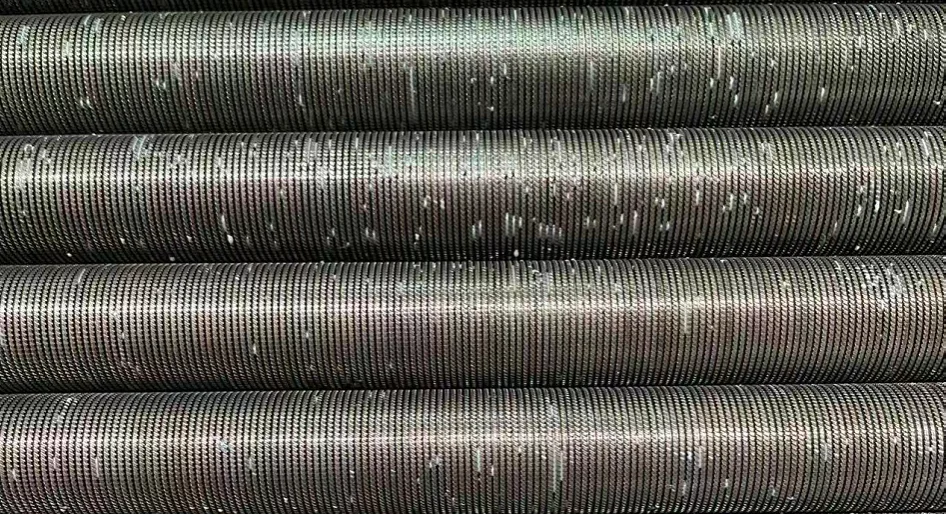
The Role of Precision Rolling Tools in Maximizing Heat Exchanger Thermal Efficiency
Discover how the micro-geometric precision of finned tube rolling blades directly determines heat transfer coefficients and prevents thermal contact resistance in industrial heat exchangers.
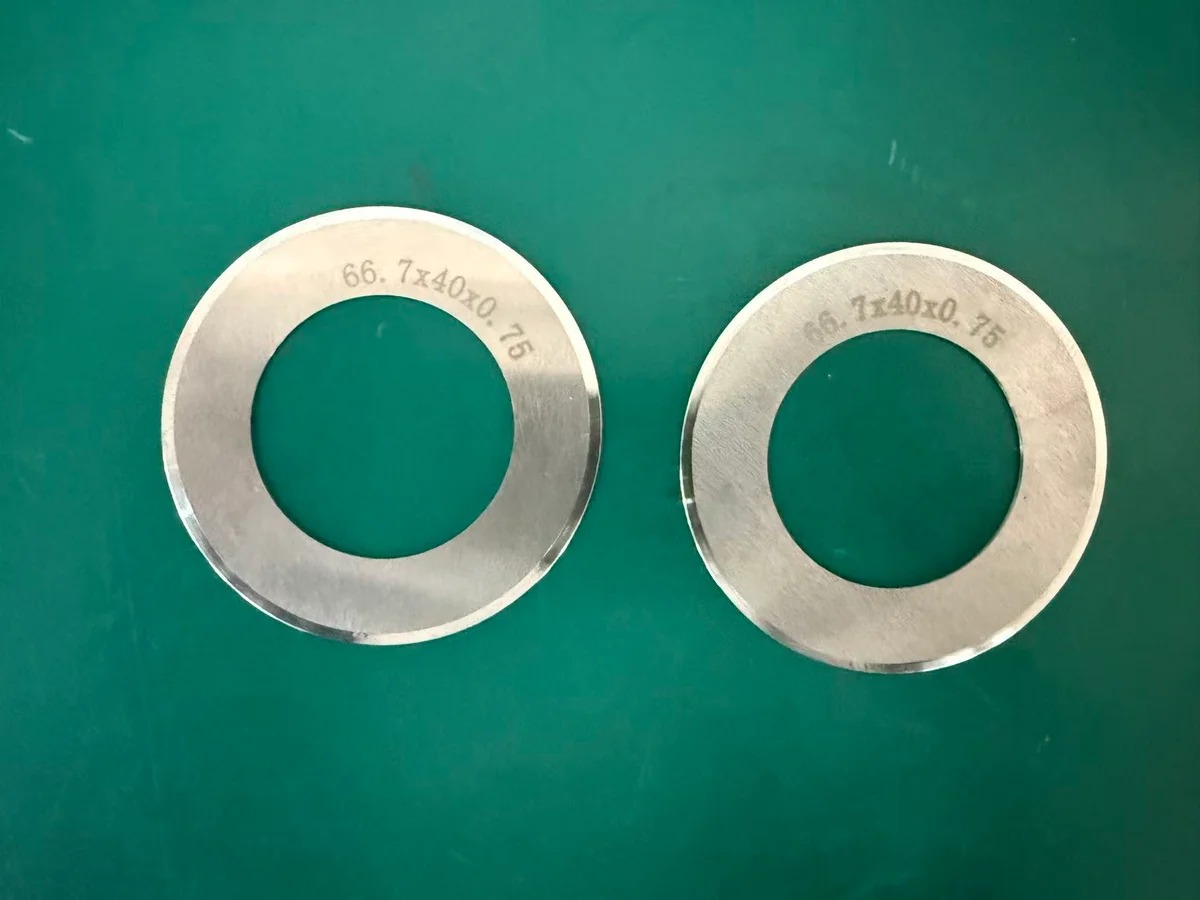
The Metallurgy and Geometry of Finned Tube Rolling Blades: A B2B Manufacturing Guide
Maximize tool life and heat transfer efficiency by understanding the metallurgical and geometric design principles of industrial finned tube rolling blades.
Industrial Shear Blades for Container Glass Manufacturing: Optimizing Lifetime and Cut Quality
Learn how premium tungsten carbide metallurgy, precise blade tensioning, and optimized shear spray lubrication prevent defects and extend shear blade lifetime in high-volume glass manufacturing.