High-Efficiency Aluminum Finned Tube Rolling: Overcoming Material Adhesion and Gullet Clogging
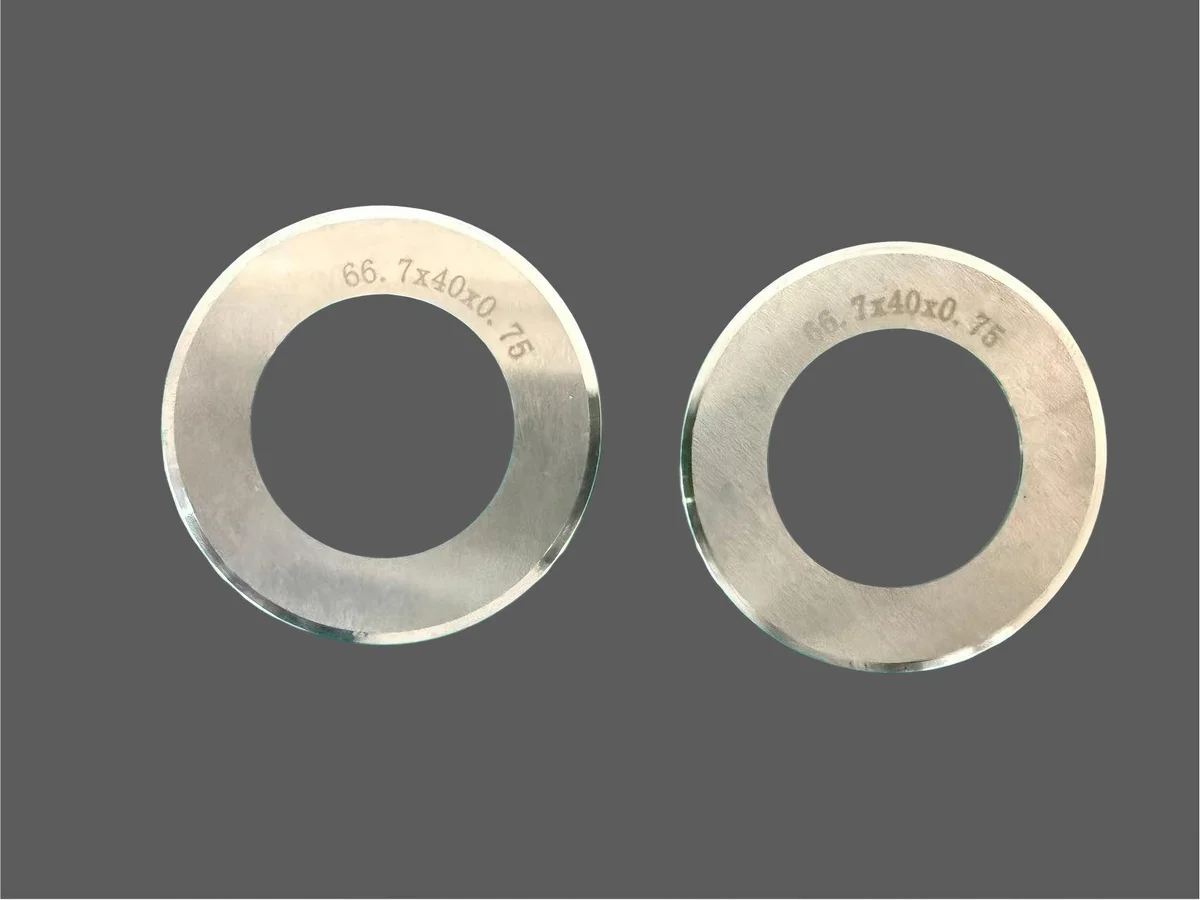
An engineering guide to aluminum finned tube rolling. Discover how to prevent material adhesion, optimize blade gullet design, and select tool steels for high-volume extrusion.
Aluminum alloys (primarily high-purity 1060 or structural 6063) are widely used in air-cooled heat exchangers, charge air coolers, and HVAC condensers. Their high thermal conductivity, low density, and excellent corrosion resistance make them ideal for extended fin surfaces.
However, in the cold-extrusion process—where an aluminum sleeve is rolled over a core tube to form integral fins—aluminum presents a severe manufacturing challenge: material adhesion. Because aluminum has low shear strength and is highly ductile, it tends to stick to the tooling under pressure. In high-speed production, this leads to gullet clogging (accumulation of aluminum in the spaces between the blade teeth), resulting in torn fins, dimensional drift, and catastrophic blade breakage.
This technical guide analyzes the mechanical and metallurgical strategies required to prevent aluminum adhesion and optimize your aluminum finned tube rolling blade performance.
1. The Mechanics of Gullet Clogging
In extruded finned tube manufacturing, the aluminum is forced to flow into the gaps between adjacent rolling blades (the gullets). If the aluminum adheres to the steel surface, it does not release cleanly as the tube rotates out of the arbor assembly.
This initiates a chain reaction:
- Initial Adhesion: A microscopic layer of aluminum cold-welds to the gullet radius.
- Compaction: On the next rotation, more aluminum is forced into the partially blocked gullet, compacting the material under extreme pressure.
- Clogging: The gullet becomes completely filled with hardened, compacted aluminum.
- Failure: The clogged blade can no longer accommodate the flowing aluminum. The radial force spikes, causing the fin to tear at the root, and the resulting lateral pressure often snaps the blade.
To prevent clogging, the tooling design must facilitate the clean release of the plasticized aluminum from the blade surface.
2. Tooling Design: Optimizing Gullet Geometry and Finish
Preventing adhesion requires a combination of precise blade geometry and superior surface finishes.
A. Gullet Radius and Profile
The transition at the bottom of the gullet must be a continuous, polished curve:
- Sharp Corners: Sharp corners at the root of the gullet act as traps where aluminum particles accumulate.
- Full Radius: Blades must feature a fully ground, generous gullet radius that encourages the aluminum to flow smoothly upward and eject cleanly during rotation.
B. Surface Finish (Ra)
The surface roughness of the blade flanks and gullets is the single most critical factor in preventing adhesion:
- Standard Grind (Ra > 0.4 μm): The microscopic peaks and valleys of the ground steel act as mechanical anchors for the soft aluminum.
- Super-Finishing (Ra < 0.1 μm): Polishing the blade flanks to a mirror finish removes these anchor points, drastically reducing the coefficient of friction and preventing the aluminum from sticking.
3. Metallurgy: Selecting the Right Tool Steel
Because aluminum rolling forces are lower than those required for stainless steel, the primary metallurgical requirement is not extreme hardness, but rather homogeneity and wear resistance.
- Vacuum-Degassed HSS M2 (1.3343): Offers an excellent balance of wear resistance and toughness. The vacuum-degassing process removes microscopic impurities and gas pockets, ensuring a uniform carbide distribution that resists micro-pitting.
- Cold-Work Tool Steel D2 (1.2379): Highly effective for lower-speed lines. Its high chromium content (12%) provides moderate corrosion resistance against water-soluble coolants.
- Powder Metallurgy (PM) Steels: For high-volume, continuous production lines, PM steels provide an ultra-fine grain structure that allows for a superior polished finish and extends tool life by up to 200%.
4. Coolant and Filtration Strategy
Unlike copper rolling which uses neat mineral oils, aluminum rolling typically utilizes water-soluble synthetic or semi-synthetic emulsions to manage the high thermal energy generated during extrusion.
- Concentration: The emulsion concentration should be maintained between 8% and 12% to provide sufficient boundary lubrication while maximizing cooling capacity.
- Filtration: Aluminum generates a large amount of microscopic metallic “fluff” or debris. If this debris is recirculated in the coolant, it will get trapped between the blade and the tube, accelerating abrasive wear and adhesion. A high-efficiency magnetic or paper-band filtration system (filtering down to 10 microns) is essential for maintaining coolant integrity.
The NEXMEK Precision Guarantee
NEXMEK is a premier manufacturer of high-precision aluminum finned tube rolling blades. We combine vacuum heat treatment, super-polished gullet grinding, and advanced PVD coatings to deliver tooling that eliminates material adhesion and maximizes your extrusion line efficiency.
Our technical engineers in Shanghai can analyze your current arbor setups, coolant configurations, and alloy specifications to design a customized tooling package that reduces downtime and lowers your total cost of ownership.
Contact us today to request a technical consultation or receive a B2B quotation.
موارد ذات صلة
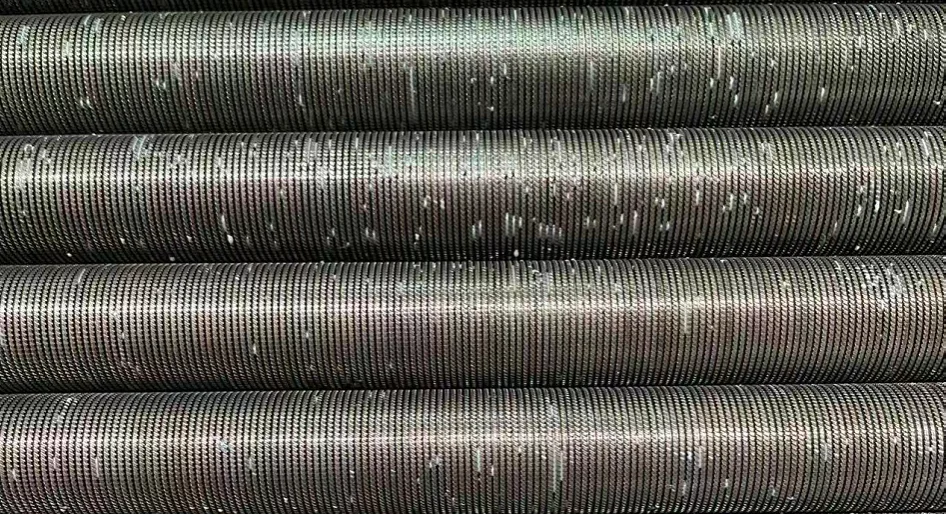
The Role of Precision Rolling Tools in Maximizing Heat Exchanger Thermal Efficiency
Discover how the micro-geometric precision of finned tube rolling blades directly determines heat transfer coefficients and prevents thermal contact resistance in industrial heat exchangers.
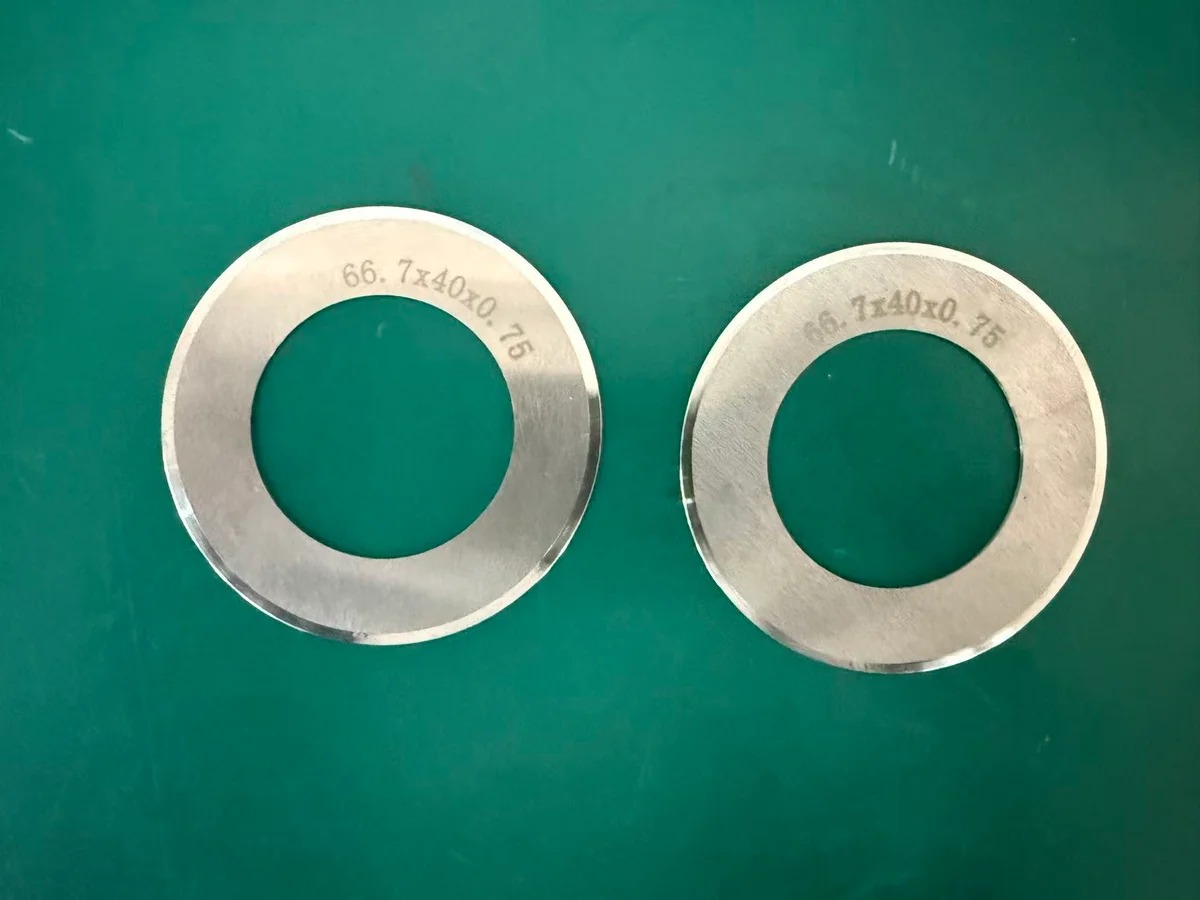
The Metallurgy and Geometry of Finned Tube Rolling Blades: A B2B Manufacturing Guide
Maximize tool life and heat transfer efficiency by understanding the metallurgical and geometric design principles of industrial finned tube rolling blades.
Industrial Shear Blades for Container Glass Manufacturing: Optimizing Lifetime and Cut Quality
Learn how premium tungsten carbide metallurgy, precise blade tensioning, and optimized shear spray lubrication prevent defects and extend shear blade lifetime in high-volume glass manufacturing.