Stainless Steel Finned Tube Rolling: Managing High Compressive Stress and Work-Hardening
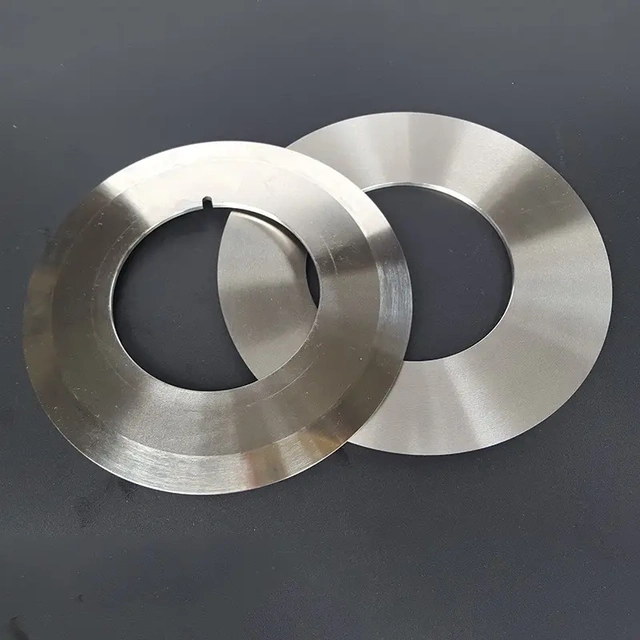
An engineering guide to stainless steel finned tube rolling. Learn how to manage high compressive stress, overcome work-hardening, and select vacuum heat treatments for tooling.
Stainless steel alloys (such as Grades 304, 316L, and 321) are widely specified in petrochemical heat exchangers, power plant boilers, and nuclear steam generators due to their exceptional corrosion resistance and high-temperature strength. However, when it comes to manufacturing integral finned tubes, stainless steel represents the most difficult material class to deform.
Compared to copper or aluminum, stainless steel requires up to three times the radial rolling pressure to initiate plastic deformation. Furthermore, stainless steel exhibits a high work-hardening exponent ($n \approx 0.3$). As the metal is deformed by the rolling blades, it rapidly increases in strength and hardness, subjecting the cutting edges to extreme mechanical and thermal stress.
This technical guide provides an engineering analysis of how to manage work-hardening and compressive stress through optimized stainless steel finned tube rolling blade design and heat treatment.
1. The Challenge of Work-Hardening ($n$) and Compressive Stress
When rolling stainless steel, the material undergoes severe plastic deformation. As the aluminum-like softness is lost, the metal becomes harder and more resistant to flow:
- Thermal Generation: The high energy required to deform the steel generates localized temperatures at the blade tip exceeding 600°C.
- Compressive Loading: The blade tip must withstand compressive stresses exceeding 2,500 MPa.
- Flank Friction: The work-hardened stainless steel slides against the blade flanks, causing intense abrasive wear and localized micro-fractures (chipping).
If the tooling material lacks sufficient hot-hardness (resistance to softening at high temperatures) or compressive yield strength, the blade tip will deform plastically (flatten) or fracture catastrophically.
2. Metallurgy: Cobalt-Alloyed HSS and Cryogenic Heat Treatment
To survive the extreme compressive and thermal loading of stainless steel extrusion, standard HSS M2 is insufficient. Tooling must be fabricated from premium cobalt-alloyed High-Speed Steels.
A. High-Speed Steel M42 (1.3247)
M42 is the industry standard for tough-to-machine alloys:
- Cobalt Content (8%): Cobalt increases the “red hardness” of the steel, allowing the blade to maintain its hardness (up to 66 HRC) even when operating at temperatures up to 600°C.
- Molybdenum Content (9.5%): Enhances toughness and ensures a uniform carbide structure that resists fatigue cracking.
B. Double-Vacuum Hardening and Cryogenic Treatment
The heat treatment process is critical to maximizing the structural integrity of the steel:
- Double-Vacuum Hardening: Prevents decarburization of the blade surface, ensuring uniform hardness from the core to the cutting edge.
- Sub-Zero Cryogenic Treatment (-196°C): Promotes the complete transformation of retained austenite into hard martensite. This eliminates internal micro-stresses and increases the dimensional stability of the blade, preventing axial distortion during rolling.
- Triple Tempering: Relieves residual stresses while maximizing the fracture toughness of the martensitic matrix.
3. Geometric Modifications: Strengthening the Cutting Edge
To prevent the blade tip from chipping under the high lateral forces induced by work-hardened metal, the geometric profile must be modified compared to copper or aluminum designs:
- Obtuse Flank Angles (26° – 30°): Increasing the flank angle provides more material support directly behind the blade tip, distributing the compressive load over a larger cross-sectional area.
- Increased Tip Radius (0.15 mm – 0.25 mm): A slightly larger tip radius prevents the blade from scoring the tube too deeply on the first pass, allowing for a more gradual, progressive deformation that minimizes work-hardening rates.
- Reinforced Root Lands: A wider land at the base of the blade prevents lateral flexing, ensuring that the blade remains perfectly perpendicular to the tube axis.
4. Lubrication and Cooling: Managing Heat Dissipation
Thermal management is critical to extending blade life when rolling stainless steel.
- Neat Cutting Oils: High-viscosity neat oils containing active extreme-pressure (EP) additives (chlorinated or ester-based) are required to maintain a lubrication film under 2,500 MPa of pressure.
- Coolant Temperature Control: The oil temperature should be maintained below 40°C using external heat exchangers. Hot oil loses its viscosity and lubricating film strength, leading to immediate metal-to-metal contact and rapid blade wear.
The NEXMEK Advantage for Tough Alloys
NEXMEK is a leading B2B manufacturer of high-performance tooling for the heat transfer industry. Our stainless steel finned tube rolling blades are manufactured from vacuum-hardened HSS M42 and subjected to triple-tempering and sub-zero cryogenic treatments. With tolerances held within ±0.003 mm, NEXMEK blades deliver the structural rigidity and thermal stability required to extrude high-quality stainless steel finned tubes with maximum tooling lifespan.
Contact our engineering team in Shanghai to discuss your specific alloy requirements and arbor configurations.
Recursos Relacionados
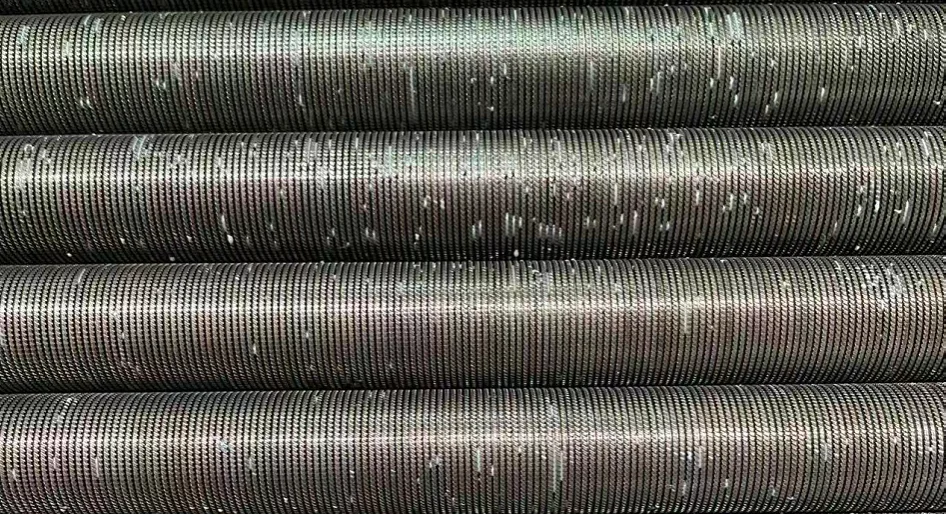
The Role of Precision Rolling Tools in Maximizing Heat Exchanger Thermal Efficiency
Discover how the micro-geometric precision of finned tube rolling blades directly determines heat transfer coefficients and prevents thermal contact resistance in industrial heat exchangers.
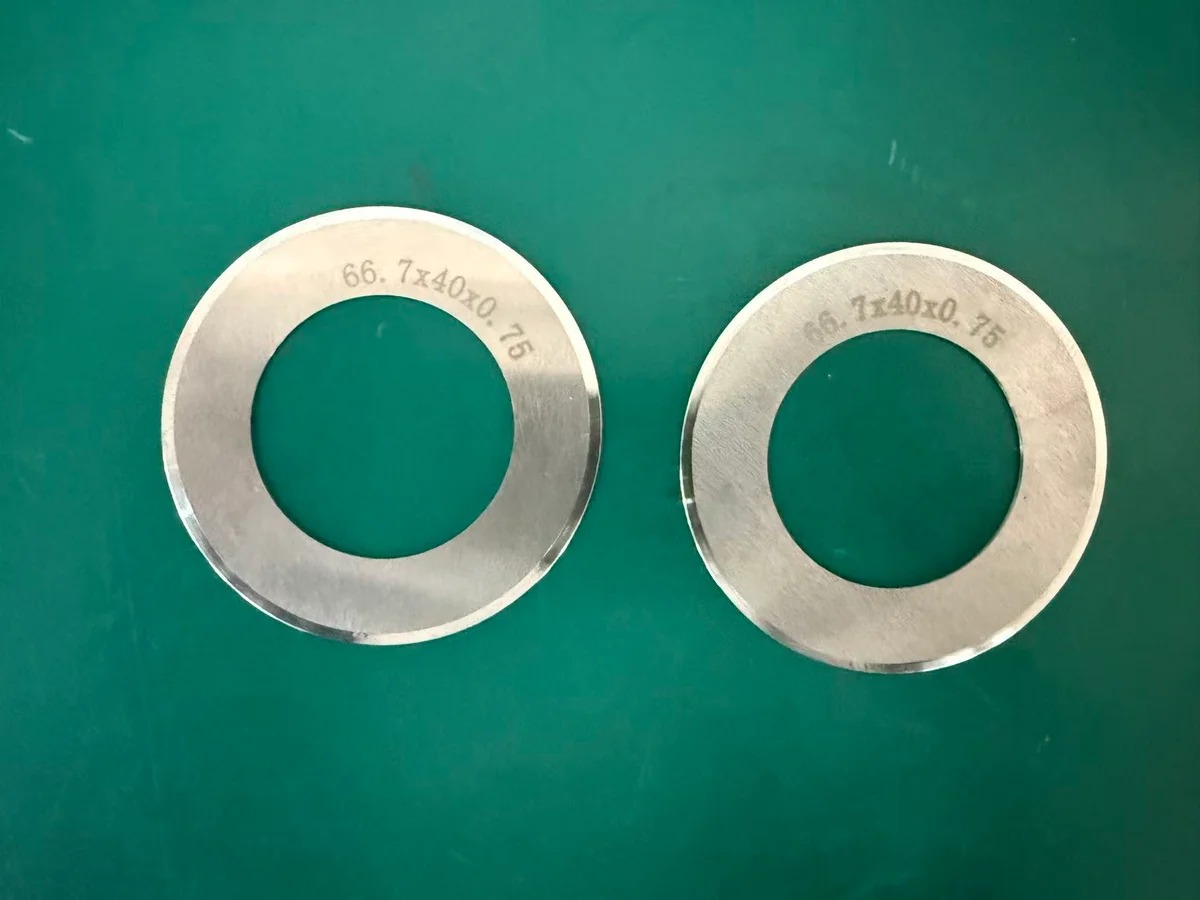
The Metallurgy and Geometry of Finned Tube Rolling Blades: A B2B Manufacturing Guide
Maximize tool life and heat transfer efficiency by understanding the metallurgical and geometric design principles of industrial finned tube rolling blades.
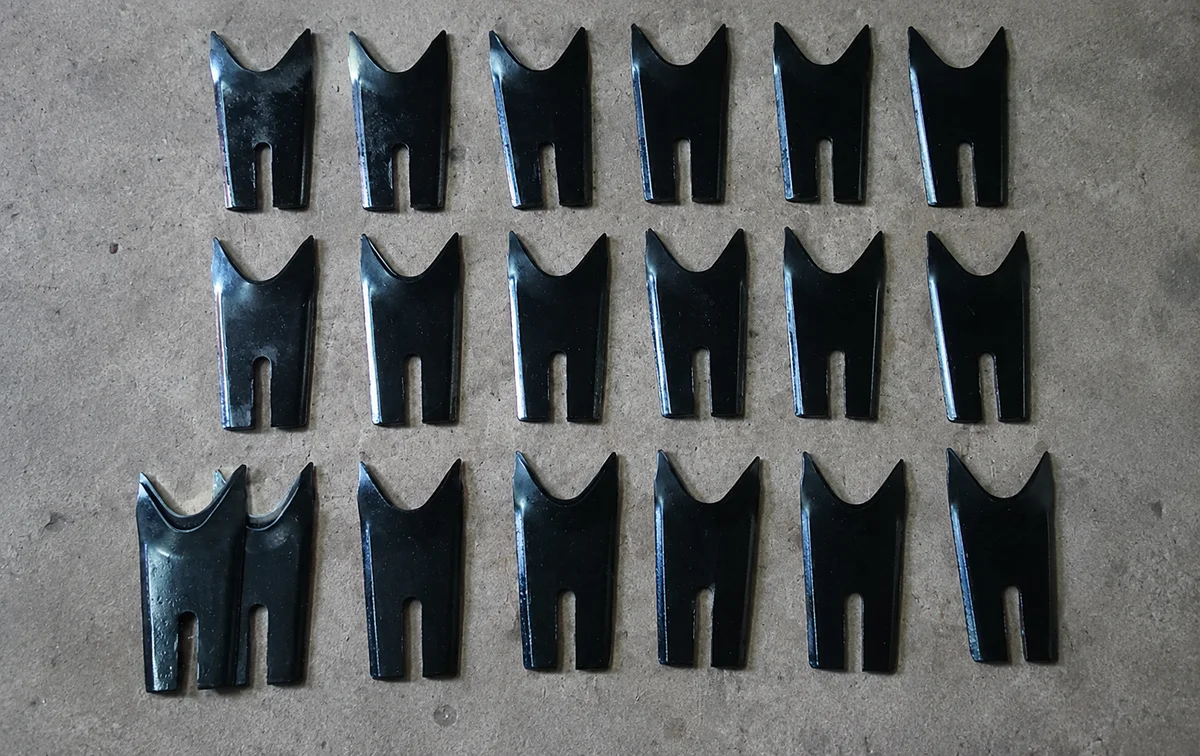
Industrial Shear Blades for Container Glass Manufacturing: Optimizing Lifetime and Cut Quality
Learn how premium tungsten carbide metallurgy, precise blade tensioning, and optimized shear spray lubrication prevent defects and extend shear blade lifetime in high-volume glass manufacturing.